Summary: June 24 marks Messi's birthday, a quiet date between seasons that fans treat like a ritual. Born in
June 24 isn't a date that screams for attention on the football calendar. No major tournament final falls on it. No transfer deadline. Yet for anyone who has tracked Lionel Messi's career with even mild curiosity, the date carries a strange weight. Messi's birthday lands in the quiet lull between European seasons and pre-season tours。a pocket of stillness that somehow suits a player whose greatness has always been more about repetition than spectacle. I've spent years watching how fans mark it—the same way they mark the birth of a saint or a national holiday. It's an odd, almost religious attachment, and it says as much about Messi as any trophy does.The numbers around Messi's birthday are absurd in a way that has become routine. Born in 1987 in Rosario, Argentina, he turned 36 this past June. By that age most forwards are either retired or playing in leagues where the sun burns slower. Messi?
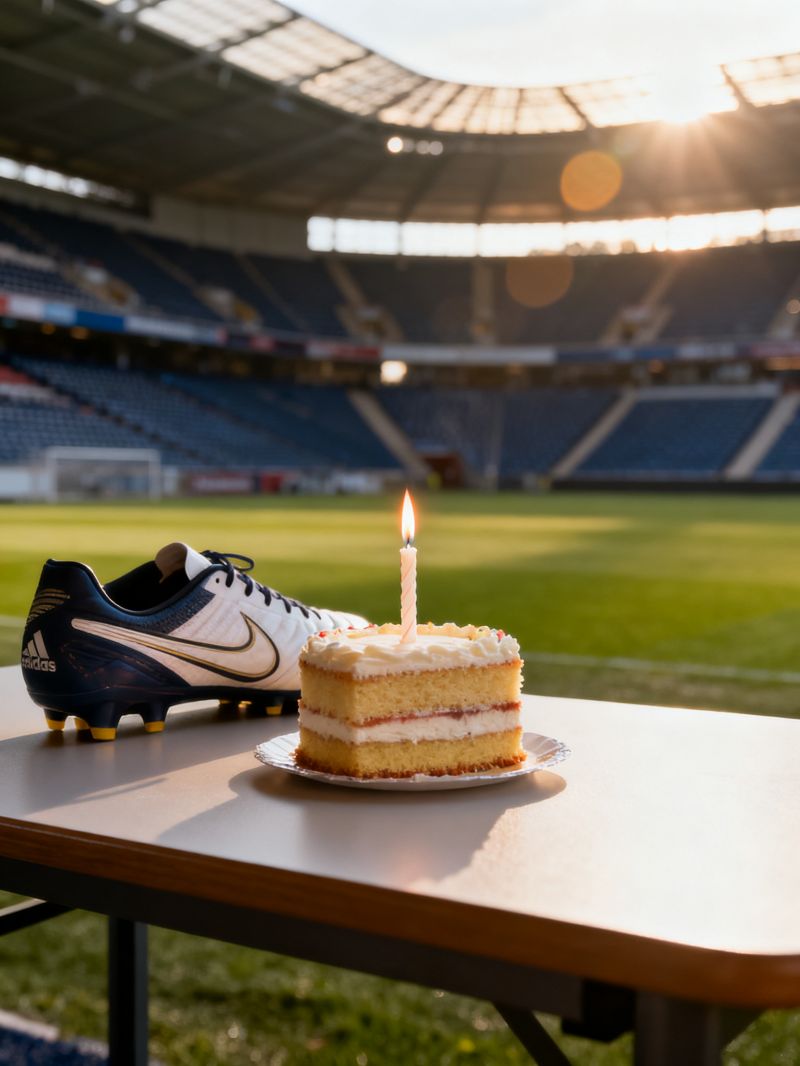
He was still lifting the Ligue 1 title with Paris Saint-Germain and, months later, dragging Argentina to a World Cup final. I remember a clip from his 35th birthday party—a small gathering in Barcelona, no cameras。just family and a few friends from the neighborhood. Someone asked him what he wished for. He laughed and said, "Another year of doing this." That's it. No grand pronouncements. The man treats his own birthday like a training session: show up, do the work, go home. The humility is genuine, not performative, which is why it grates on people who prefer their icons to be dramatic.What gets lost in the Messi birthday discourse—yes, there is such a thing, especially on social media—is how the date intersects with his actual football life. June 24。2021, for instance. He was days away from the Copa América in Brazil, a tournament Argentina hadn't won in 28 years. His birthday that year was spent in a hotel room in Brasília, eating a slice of cake with Rodrigo De Paul and Emiliano Martínez. No party. No Instagram story. Two weeks later he was lifting the trophy at the Maracanã, and the photo of him sitting alone with the cup—quiet, almost solemn—circulated more than any birthday post ever could. That's the pattern. Messi's birthday tends to arrive just before the moments that define him, as if the universe needed one more quiet day before the noise.I've often wondered why fans cling so hard to Messi's birthday. Part of it is simple: it's a day to celebrate a person。not a performance. You don't have to argue about tactics or stats. You just say happy birthday. But there's something else. Watching Messi age—turning 30, then 35, now 36—has become a shared measure of our own time. His birthday reminds us that the thing we love is finite. When he turned 30 in 2017, he was still the fastest player on the pitch. At 36, he walks more, picks his moments, and still ends up with the most goal contributions in a calendar year. The decline is there if you squint, but it's so gentle it feels like a rumor. That's the strange comfort of June 24: it comes around every year, and every year he's still here, still doing it. Until, one day, he isn't.
So no, Messi's birthday isn't a global event. It's a private ritual that happens to be public. A small cake, a few friends, a training session the next morning. The world has decided to make a fuss anyway. I'll keep watching—not for the celebrations。but for what comes right after: the season, the tournament, the next impossible thing. That's the real gift, and it has nothing to do with candles.