Summary: Mercenaries 2012 remains a standout open-world sandbox where faction double-crossing and a deck of 5
he most honest thing about Mercenaries 2012 is that it never pretends to be subtle. You drop into a warzone, you pick a faction, and you start breaking things. That’s the pitch. Pandemics。nuclear threats, endless factional skirmishes—Pandemic Studios built a playground where the only moral compass is the one strapped to your wrist. I spent a weekend replaying it recently, and the experience is less about nostalgia and more about recognizing how few games since have matched its particular brand of chaotic agency.What sticks with me is the deck of 52. You hunt high-value targets not because a quest marker tells you to, but because the card sits in your menu, mocking you. Each capture unlocks cash。gear, or airstrikes. The genius is that the game never forces you to finish the deck. You can ignore the Queen of Spades and just drive a tank through a bridge for twenty minutes. That freedom feels almost reckless by today’s design standards, where every system funnels you toward a curated narrative beat. Mercenaries 2012 trusts you to make your own fun. Sometimes that means calling in a surgical missile strike on a warlord’s compound. Sometimes it means stealing a helicopter and seeing how long you can hover upside down before the rotors clip a palm tree.The faction system remains the sharpest edge. You can work for the Allied Nations。the People’s Liberation Army, or the Russian mafia—sometimes all three in the same mission chain. Double-crossing is expected, even encouraged. I remember taking a contract to protect a VIP, then immediately selling his location to a rival outfit because the payout covered a new rifle I wanted. The game didn’t scold me. It just adjusted the faction reputations and moved on. That kind of systemic indifference to morality is rare. Most open-world games punish you for coloring outside the lines. Mercenaries 2012 hands you the crayon and asks what color you’d like to burn down next.Technically, the game shows its age. The vehicle handling is floaty, the enemy AI occasionally forgets you exist, and the draw distance on console versions makes distant snipers look like flickering pixels. But the destruction model still holds up—blowing up a fuel depot sends a shockwave that topples nearby trees and shreds infantry caught in the blast. It’s not physics-perfect。but it’s satisfying in a way that many modern shooters have sanded down in favor of scripted set pieces. I’d argue that Mercenaries 2012’s jank is part of its charm. A perfectly polished version would lose the improvisational chaos that makes every session feel like a B-movie action flick directed by a demolition crew.
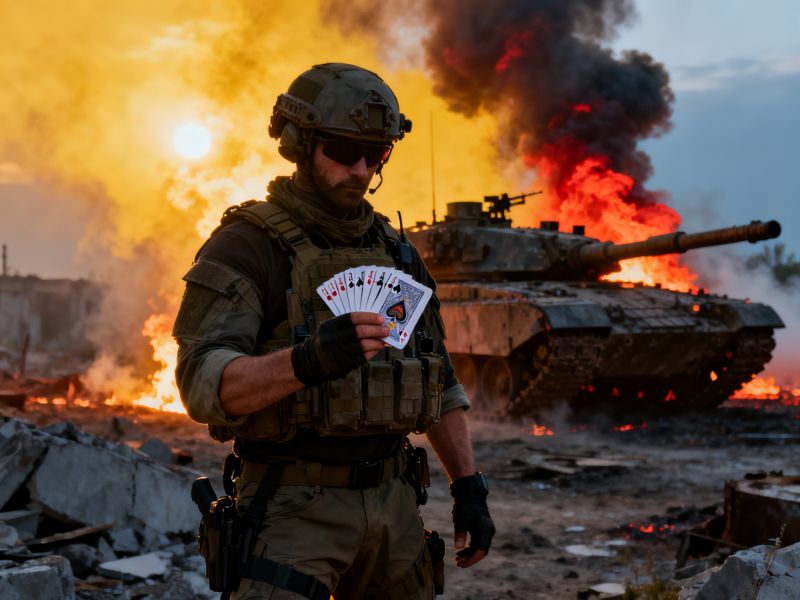
Why bring it up now?Because the industry has largely abandoned the mid-budget, systems-driven sandbox in favor of either live-service grind or narrative prestige. Mercenaries 2012 didn’t need a battle pass or a ten-year roadmap. It just gave you a war, a deck of cards, and a grappling hook. That’s a leaner。meaner design philosophy worth revisiting. I’m not saying every game should let you nuke a village for a cash bonus. But there’s a lesson in how Mercenaries 2012 treats players as adults capable of setting their own objectives. You want to ignore the main plot and spend three hours hunting playing cards?
Go ahead. The war will wait. That kind of respect for player autonomy is something I miss—and something that still makes Mercenaries 2012 worth booting up, jank and all.